Finding and Living Rhythms of Grace
3 Ps on Sabbath: A Poem, A Pondering, A Practice
A Poem: “One Word I Don’t Need”
by James Crews
I am banishing the word busy
from my mind, like picking
stones from the lentils I have
just washed in the colander.
Is there an uglier word than
busy, with its two hurried
syllables and hard consonants
rushing out of the mouth?
Used mostly as an excuse
not to be where I am right now,
which is leaning over the sink
and letting lentils slide through
my fingers, feeling their smoothness
as I soften into the minutes,
no longer seeing this as a task
but simply imagining what
it will be like later to savor
the lentils after they’ve simmered
for hours with roasted tomatoes,
cumin, and coconut milk, when we
ladle them into our waiting bowls
and silence our phones, laying them
both face down on the table.
You can find “One Word I Don’t Need” in James’s collection of poems and essays Unlocking the Heart.
A Pondering: Finding and Living the Rhythms of Grace
I’ve been thinking a lot about Genesis 1 over the past few weeks. Partly because it’s the beginning of a new year, and Genesis 1 is the beginning of the beginning. Also because I’ve been preaching on it a lot lately, and that’s one way to get me to think deeply about a passage.
Genesis 1 poetically depicts what Eugene Peterson once called “rhythms of grace.” He was talking about the role of the Sabbath in the creation story, and how the giftedness of the Sabbath is mirrored, for example, in how the “days” in creation begin with the evening. Have you ever noticed that? “And it was evening, and it was morning, day X.” It’s a refrain on each of the first 6 “days” of the creation poem. In the Bible, the day begins with sunset!
And what did ancient people do when the sun set? They gathered around a fire, told stories, laughed, connected, and then went to sleep! In short, they experienced the gifts of the Sabbath: rest, connection, and delight. And this did this first thing when the day began. When they got up to work, the day was half over! Rest comes before work in creation. That’s why it’s a rhythm of grace. Grace is by definition undeserved. Rest and delight are also gifts we receive—we cannot earn them by completing our work or win them as a reward for good behavior or workaholism. Sabbath rest is a gift. And it comes before work!
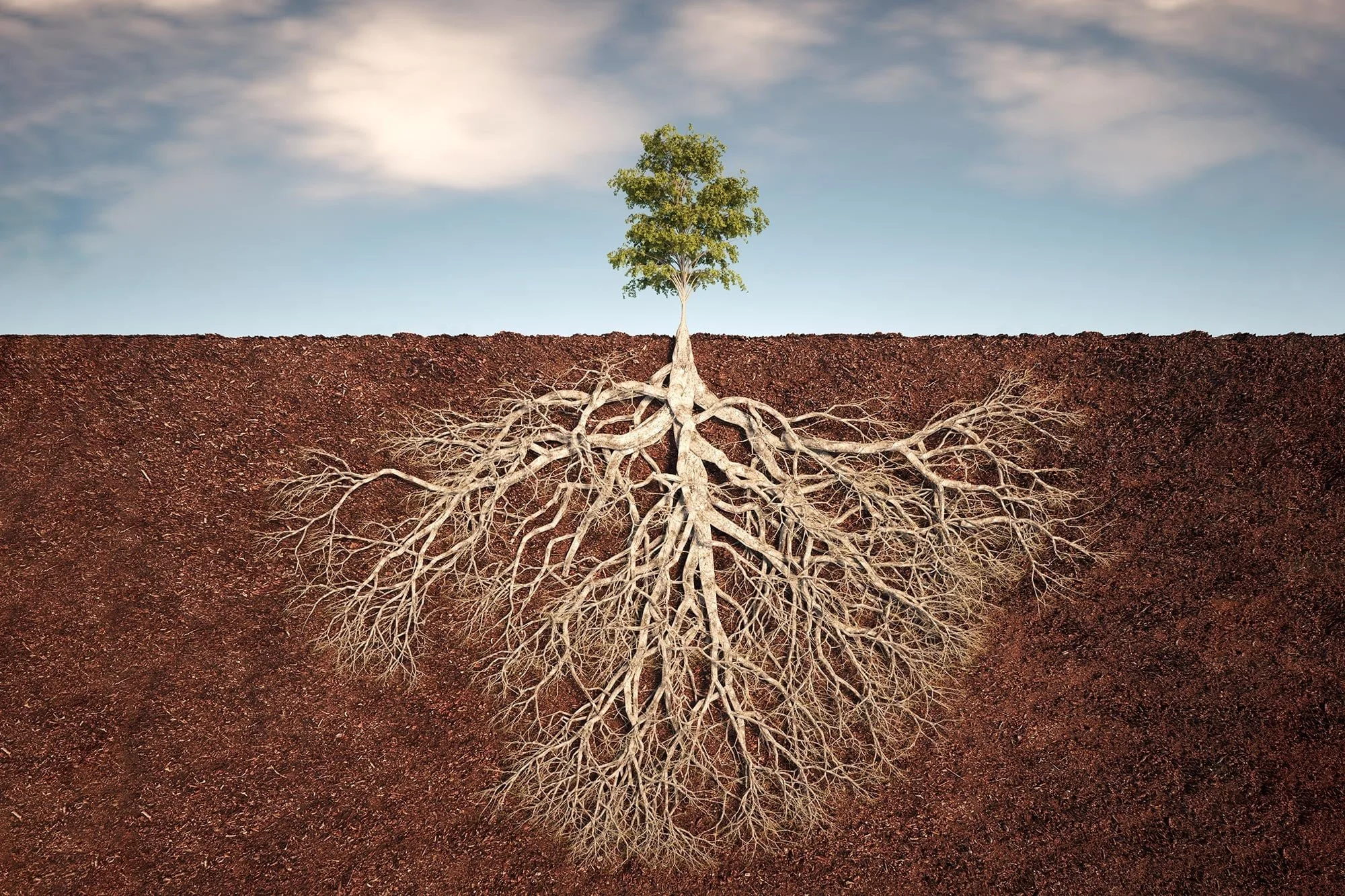
But our roots are not planted in the rhythms of grace. Our roots are planted in the soil of scarcity. Our personal creation stories tell us we do not have enough—time, money, knowledge, accomplishments, accolades, book deals, degrees, friends, whatever.
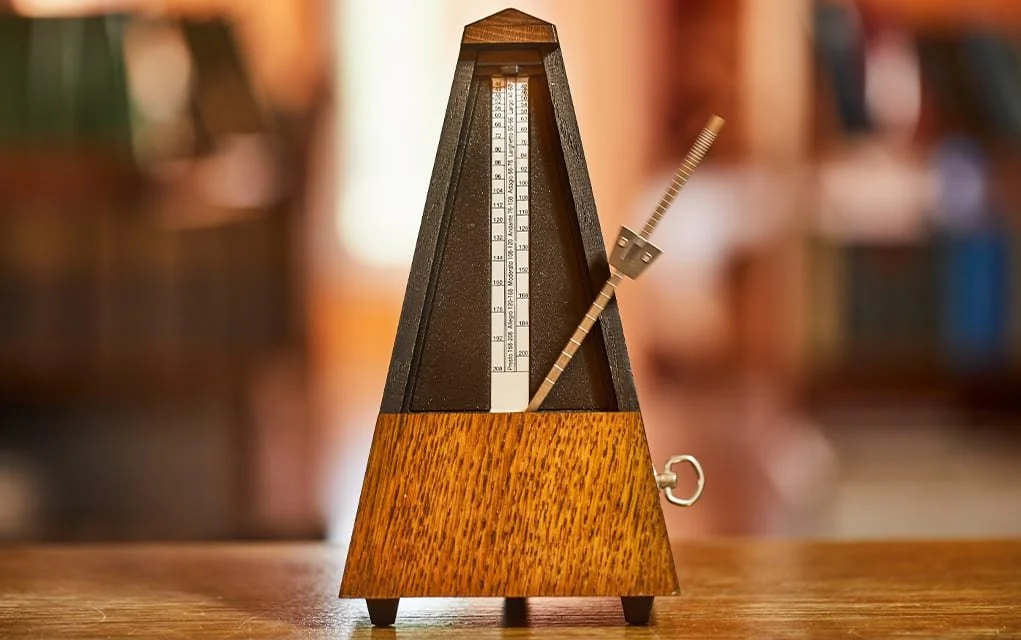
The message our roots absorb from the soil of scarcity is that we need more—we need to do more in order to get more in order, ultimately, to be more. And the only way to do this is to move faster. Our metronomes are hurry and hustle, not Sabbath and grace.
Psychologist Carl Jung once said that “hurry isn’t of the devil, hurry is the devil.”
In his book The Ruthless Elimination of Hurry, John Mark Comer quoted John Ortberg quoting Dallas Willard, who said: “Hurry is the great enemy of spiritual life in our day.”
The problem, John Mark suggests, is not having a lot to do, it’s not having a full calendar and living a full life. The problem is when you have too much to do and the only way to keep the quota is to hurry—to speed up your life to cram it all in.
This is a problem because “hurry and love are incompatible.”
They’re incompatible because love is presence, and presence takes time. And when we hurry, time is the one thing we don’t have. The true cost of a life defined by hurry is a diminished capacity to love. It is the loss of what poet and storyteller Martin Shaw called “fidelity of attention.”
Because the assumption of Genesis 1 is that if we allow ourselves to be apprenticed by the rhythms of grace we will live in step with the Spirit and experience the joy God poured into creation.
This does not mean that our life will be easy. We cannot make God rain blessings on us; we can’t make lightning strike to capture it in a bottle. But we do have agency. We can ionize the atmosphere, creating the conditions in which rain and lightning are more likely.
Organizing our lives around the rhythms of Sabbath—a rhythm of grace—does what all the great spiritual practices do: it ionizes the atmosphere, it puts us in the position to be the recipients of God’s joy.
What might it look like for 2026 to be the year of the Sabbath?
How would your life change if you set an intention to slow down, be more present, commit to less, and make more room in your everyday life for rest, connection, and delight? What might happen if you set yourself up to be your best self by prioritizing experiences that bring you joy instead of doom scrolling the news or mindlessly scrolling Instagram? What might happen if you took Wendell Berry’s sage advice and didn’t ignore the headlines, but chose to “be joyful, though you’ve considered all the facts”?
This isn’t easy. Walking the Sabbath way is not easy, especially in a culture in which living in tune with the Sabbath is inherently an act of protest, in which finding true rest is, ironically, pretty hard work. But every journey begins with a single step. Frodo and Sam leaving the Shire. Harry Potter walking onto Platform 9¾. You making one choice, today, to make room in your life for delight and love to grow.
The Sabbath is calling. Will you come?

A Sabbath Practice: Drive the Speed Limit
I’ve made a conscious effort to drive the speed limit—as a spiritual practice of slowing down—for the past 6 years. Apart from the Sabbath, it’s been one of the most transformative and impactful spiritual practices of my life. It hasn’t been easy, because I have always been a speeder. But it has helped me organize my life in a way that helps me be a better version of myself each day.
For example, now, when I arrive at my destination, my body and soul arrive at the same time. I am less anxious, less apologetic, less rushed and harried.
If you try this, know that you’re going to get passed by a lot of cars. (It’s okay, because you’ll probably catch up to them at the next traffic light! Just try not to be self-righteous about that…!) Getting passed by cars is not dangerous, but it will feel different. It may begin to feel like a metaphor of your life, like everyone is advancing faster than you, achieving more than you, living better than you.
But I’m convinced by poet and life coach Michelle Wiegers, who learned one day that
driving slowly
is the only way
to live my best life,
to keep from running so fast
that I go right past myself.
– “Slow Down”
Try slowing down today while you drive—not because the roads are craaaazy here in Michigan right now, but because driving slower might help you live your best life, if you let it.